As a prepaid energy meter supplier who’s worked with thousands of residential and small business customers over the past decade, one of the most common questions I get is this: “What happens if I forget to top up my meter on time?” It’s not a trivial question—prepaid meters are designed around pay-as-you-go convenience, but that convenience doesn’t come with a “set it and forget it” pass for late or missed top-ups. Over the years, I’ve walked dozens of homeowners through unexpected penalties, and I’ve also seen small cafes and local shops hit with charges that could’ve been avoided with a quick reminder. Let’s break this down clearly, from immediate meter actions to long-term consequences, and what you can do if you ever slip up. Prepaid Energy Meter

First, let’s get one thing straight: prepaid meters aren’t just a “pay first, use later” tool for energy companies—they’re built to automate the entire process, so there’s almost no human interaction involved when a balance runs out. That means the first penalty isn’t a fine or a knock on the door; it’s an automatic disconnection of your power. This is the most immediate consequence, and it happens almost instantly once your balance hits zero (most meters send a low-balance alert at £5 to £10 remaining, depending on your region, to give you a heads-up). I once had a regular customer, a retired teacher named Margaret who lives in a small village, call me in a panic at 7 a.m. on a Saturday because her pension hadn’t gone through and she’d forgotten her top-up code. She’d woken up to a dark house, no water heater, no way to make coffee, and no way to top up online until her bank opened. That automatic disconnection is non-negotiable for the meter’s core function, and it’s the first line of defense for energy providers to avoid unpaid bills.
But what if you do top up after disconnection? There’s a fee for that, and it’s not small. Most regions require a “reconnection fee” to cover the cost of sending an engineer out to reset the meter—this ranges from £20 to £80, depending on where you live and how soon you arrange the reconnection. I’ve seen some providers charge extra for out-of-hours disconnections, too; if your power cuts at 2 a.m. on a bank holiday, you could pay double or triple the standard reconnection fee. Margaret, for example, had to pay £45 for same-day weekend reconnection because she couldn’t wait until Monday. That’s not a random charge—it’s a documented cost of sending a technician out, and it’s clearly outlined in most supplier terms and conditions, though many customers don’t read the fine print.
Beyond disconnection and reconnection fees, there are longer-term penalties that can affect your energy service and even your credit score. If you miss multiple top-ups and get disconnected repeatedly, some providers will penalize you with higher unit rates when you do top up, to offset the risk of non-payment. I worked with a small bakery owner last year who’d had three disconnections in six months because he’d been struggling with cash flow after a supply chain delay. His provider bumped his unit rate by 12% for 12 months, which added almost £150 to his monthly energy bill. That’s a steep penalty for a small business, and it’s designed to discourage repeated late top-ups.
Another less well-known penalty is meter modification. If you tamper with your prepaid meter to avoid disconnection or bypass the top-up system, that’s a criminal offense in most countries, and the penalties are far stricter than late top-up fees. Tampering can include anything from inserting a coin into the meter’s slot to hacking the digital display, and it carries fines, criminal records, and even prison time in some regions. As a meter supplier, we test every meter to detect tampering instantly—if a meter detects manipulation, it locks down completely and sends an alert to the energy provider, so there’s no way to get around the rules. I’ve had customers try to call me asking if we can “fix” a meter that’s locking out, but I have to be clear: tampering is not a solution.
For residential customers, there’s also the impact on your credit score in some markets. In the UK, for example, if you have multiple disconnections for missed top-ups and the provider lists that as a missed payment on your credit file, it can lower your credit score, making it harder to get a mortgage, a car loan, or even a mobile phone contract. I’ve seen a 30-year-old nurse miss two top-ups after a family emergency, and by the time she reconnected, her provider had reported the missed payment to credit agencies, dropping her score by 70 points. That was a wake-up call for her—she started setting up automatic top-up reminders via text and email, and hasn’t had an issue since.
Now, let’s talk about exceptions and how to avoid these penalties. The good news is that most energy providers offer assistance if you’re struggling to top up. If you’re facing financial hardship, you can apply for a payment plan, or some regions have social tariffs that offer reduced unit rates for low-income households. I always advise customers to contact their provider immediately if they think they’ll miss a top-up—waiting until you’re disconnected only makes the fees worse. For example, the small bakery owner I mentioned earlier could’ve applied for a short-term payment plan with his provider, which would’ve let him avoid the reconnection fee and the higher unit rate.
As a prepaid energy meter supplier, I also build features into our meters to help customers avoid penalties. Most of our digital meters send push notifications, text alerts, and even automated calls when your balance is running low, and some let you set up automatic top-ups so you never have to remember to manually add credit. We also work with providers to offer “emergency top-up” options, where you can get a small amount of credit for free (usually £5 or £10) to cover you until you can do a full top-up. That’s a simple feature, but it’s saved hundreds of our customers from unexpected disconnection fees.
It’s important to note that penalties vary by region and energy provider—there’s no one-size-fits-all rule. For example, in the US, some states have strict regulations on reconnection fees, capping them at $30, while other states allow providers to charge up to $100. In the EU, energy suppliers are required to give customers at least seven days’ notice before disconnection, which isn’t always the case in the UK for small prepaid customers. That’s why I always advise customers to check their specific provider’s terms and conditions, and to keep a record of their top-ups and communications with their supplier.
I’ve also seen customers make the mistake of assuming that prepaid meters are more lenient than postpaid meters when it comes to late payments, but that’s not true. Prepaid meters are designed to prevent debt, so when you miss a top-up, you’re essentially in default on your energy use, same as if you missed a postpaid bill. The difference is that with prepaid, the penalty is immediate and automatic, whereas postpaid penalties usually come in the form of late fees on your bill. If anything, prepaid penalties can be more severe for small oversights because they’re unplanned.
Let’s circle back to Margaret, the retired teacher I mentioned earlier. After her scare, she signed up for our meter’s automatic top-up feature, which takes £20 from her pension every month and adds it to her energy balance. She gets a notification every time the top-up goes through, and she hasn’t had a disconnection in three years. That’s the real solution: not just understanding the penalties, but using the tools available to avoid them. As a supplier, my job isn’t just to sell meters—it’s to help customers use them effectively, so they don’t have to deal with the stress of unexpected disconnections or fees.
If you’re a homeowner or small business owner using a prepaid energy meter, the key takeaway is this: late or missed top-ups aren’t just an inconvenience—they lead to automatic disconnection, reconnection fees, higher unit rates, credit score impacts, and even criminal charges if you tamper with your meter. But you don’t have to deal with these penalties. Set up automatic top-ups, take advantage of low-balance alerts, and reach out to your provider if you’re struggling financially.
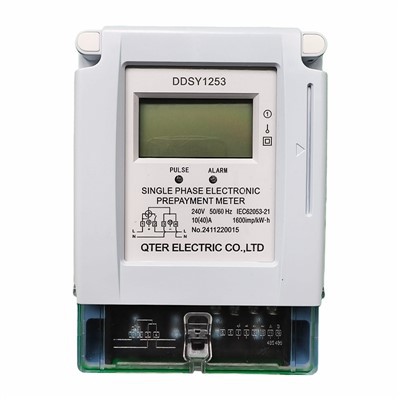
If you’re in the market for a new prepaid energy meter that comes with robust alert features and easy-to-use tools to help you avoid missed top-ups, I’m here to help. Whether you’re a residential customer looking for a reliable meter for your home, or a business owner needing a solution for multiple locations, we can work with you to find the right fit. Reach out to our team to discuss your specific needs and get a customized quote.
Electronic Energy Meter References
Ofgem. (2023). Prepayment Meter Terms and Conditions. UK Government Energy Regulator.
U.S. Energy Information Administration. (2022). Prepaid Energy Customer Protections by State.
European Commission. (2021). Energy Prepayment Metering Best Practices for Consumers.
The Energy Saving Trust. (2023). Tips for Managing Prepaid Energy Meter Balances.
Zhejiang Qunte New Energy Technology Co., Ltd.
As one of the most professional prepaid energy meter manufacturers in China, we’re featured by quality products and good price. Please rest assured to buy discount prepaid energy meter made in China here from our factory. We also accept customized orders.
Address: No. 56, Fengxi Road, Tang’ao Yu Village, Liushi Town, Yueqing City, Wenzhou City, Zhejiang Province
E-mail: 251951196@qq.com
WebSite: https://www.zjqtmeter.com/
