Hey guys, let’s cut to the chase—if you’ve ever looked at a gorgeous slate countertop, a sleek slate backsplash, or even a quirky slate accent wall and thought, “Could our Stone Processing Center handle this material?” you’re definitely not alone. I get this question like 10 times a week from contractors, interior designers, and even random homeowners who found a slab of slate at a yard sale and want to turn it into something usable. As the owner (and full-time grease monkey) of the Stone Processing Center we’re talking about, I’m here to break this down straight—no jargon, no fancy sales fluff, just real talk about what we can do, why slate’s different from granite or marble, and why you shouldn’t sleep on this material. Stone Processing Center
First off, let’s get one thing out of the way: slate is a metamorphic rock, right? It forms from clay and shale that gets crushed under tons of pressure deep underground, which gives it that super distinct foliated texture—like thin, layered sheets that split way easier along those lines. A lot of people mix it up with similar stones (I’ve heard “it’s just thin granite!” way too many times) but trust me, slate’s whole vibe is its layering, and that’s both its superpower and its biggest pain point when it comes to processing.
Here’s the big question, though—can our Stone Processing Center actually work with slate? Short answer: HELL YES. But it’s not like running regular granite through the same tools, and that’s the part most folks (even some newbie stone guys) miss. Let’s walk through what we do, step by step, so you get the full picture.
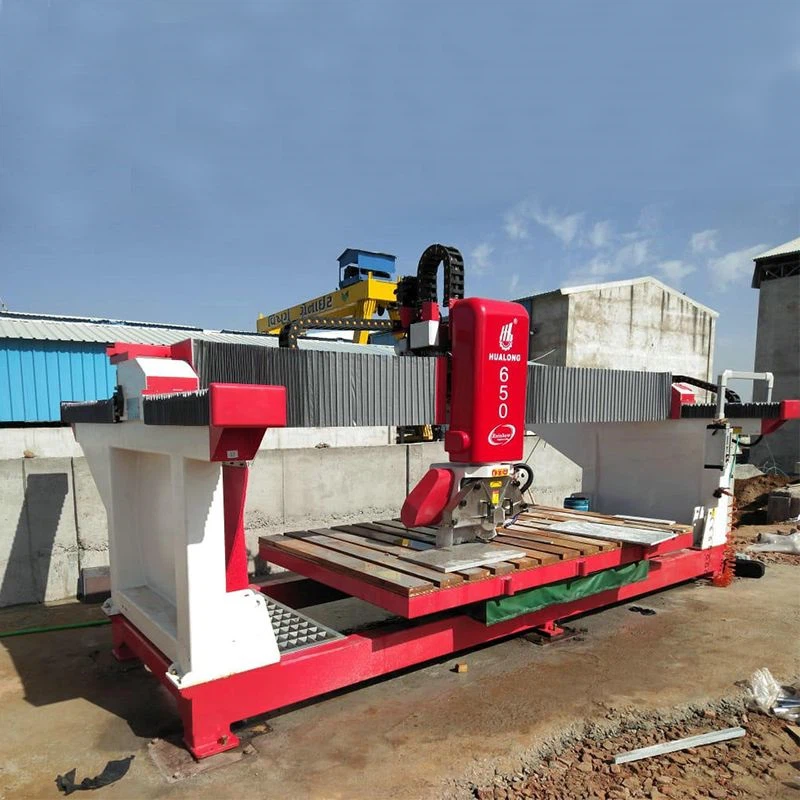
First, we start with the slab. Slate comes in big, heavy blocks just like any other dimension stone, but its layers mean it’s way more prone to chipping if you’re not careful. So when we’re prepping a slab for cutting, we don’t just crank up the saw blade and go—we adjust our diamond blade specs. For granite, we use a coarser, thicker blade to bite through that dense, crystalline structure. For marble, it’s a bit finer because marble’s softer and can scratch easier. For slate? We use a medium-grit, thin diamond blade that moves at a slightly slower RPM. Why? Because if we go too fast, the blade can catch on a layer, pull a chunk off, and leave a blemish that’s impossible to buff out later. I’ve seen guys blow $800 worth of slate because they skipped this step—don’t be that person.
Then there’s sizing and shaping. Say you want a custom countertop edge, or a slate tile for a shower, or a weirdly shaped slate sign for your café. We can do all of that, but again, the layering is key here. For straight cuts (like tiling), we can use our gang saws—same as we do for granite. But for curves, or custom profiles like ogee edges or bullnose edges? We use our CNC router, but we program it to move way slower than we would for marble. If we rush the curve, the router will catch the foliation and split the slab right down the middle. I learned this the hard way my first year—we had a client who wanted a curved slate backsplash for a high-end kitchen, and we rushed the routing. We ruined 3 slabs before we figured out we needed to tweak the feed rate by 20%. Now that’s just standard for us.
Wait, but what about finishing? Slate’s natural look is usually matte, but some people want a polished finish, right? Can we do that? Yes, but not the same way you polish granite or marble. Granite gets that high gloss from grinding with super fine grit and then buffing with a chemical polish that seals the surface. Slate, because of its layered structure, can’t handle that same kind of high polish without looking streaky. Instead, we do what’s called a honed finish—super smooth, matte, and it brings out the slate’s subtle color variations (you know, those gray, blue, green, or even reddish flecks that make slate so cool). Occasionally, if a client really wants a low-sheen polish, we’ll do a “satin” finish, which is halfway between honed and glossy, but that’s only for specific projects. We never do a full high polish on slate—9 times out of 10, it ends up looking weird and unnatural.
Now, let’s talk about the stuff that makes slate actually worth processing. It’s way lighter than granite or marble (huge for countertop installations—we don’t need 5 guys hauling a slab), it’s naturally non-porous (so no sealing required, unlike granite which needs sealing every year or two), and it’s super durable—resistant to scratches, heat, and even minor stains. That’s why it’s so popular for outdoor patios, bathroom floors, and fireplace surrounds. We do a ton of residential and commercial projects with slate, and every single one of them turns heads because it’s unique—no two slabs look exactly alike.
But hold on, I’m not gonna lie—there are caveats. Slate is brittle, so if you drop a heavy object on it, it’ll chip, same as any natural stone. Also, the layering means it’s not as strong as granite or marble if you’re making super large, unsupported spans (like a 10-foot countertop island without a support bracket under the middle). We always let our clients know that up front, so no one gets surprised when we quote them and explain why we recommend a little extra support for a big slate project. Another thing: some lower-grade slate has more “veins” or gaps between layers that can cause chipping even with the right tools. We sort our slate slabs by grade before processing, so we only work with the high-quality stuff that’s got minimal layering gaps—we don’t waste time (or our clients’ money) on slate that’s gonna fall apart mid-install.
Wait, let’s address the elephant in the room: what if you have a small project? Like, you want to make a slate cheese board or a slate coasters. Can we handle that too? ABSOLUTELY. We have a small, benchtop saw for custom small cuts, and we can sand and polish the edges so they’re smooth (no sharp, splintery bits). I made a slate cheese board for my sister last year, and she uses it every holiday—still looks perfect. No reason we can’t knock out a bunch of custom coasters for your bar too.
So here’s the real gist of it: our Stone Processing Center doesn’t just process slate—we process slate right. We don’t treat it like another generic stone; we adjust every step to account for its unique properties, because we’ve been doing this long enough to know that cutting corners with slate leads to messy, expensive mistakes. We’ve worked on everything from small residential backsplashes to large commercial floor installations, and we’ve got the tools, the know-how, and the attention to detail to get the job done right, no matter how big or small your project is.

If you’re reading this and you’ve got a slate project you need help with—whether it’s cutting, shaping, finishing, or just sourcing the right slabs—hit us up. We don’t do generic quotes, so tell us what you need, send over photos if you’ve got them, and we’ll walk you through what we can do, answer any questions, and make sure you get a product you’re stoked on. No pressure, no pushy sales calls, just guys who know stone and want to help you make something cool.
Stone Crushing Machine References
- American Society for Testing and Materials. (2019). Standard Classification for Dimension Stone. ASTM International.
- Institute of Stone Technology. (2021). Processing and Finishing of Metamorphic Dimension Stones. IST Journal of Stone Industry.
- Natural Stone Council. (2020). Slate: Properties, Applications, and Best Practices for Commercial Processing. NSC Technical Bulletin.
Fujian Province Hualong Machinery Co., Ltd.
Fujian Province Hualong Machinery Co., Ltd. is one of the most professional stone processing center manufacturers and suppliers in China, featured by quality products and good price. Please rest assured to buy high-grade stone processing center for sale here from our factory.
Address: Huangshi Industrial Zone, Putian City, Fujian Province, China
E-mail: jenkin@hualongm.com
WebSite: https://www.stonecuttingmachine.com/
