Hey there! I’m a supplier of rock drills, and today I wanna chat about a super important topic: what’s the minimum air pressure required for a pneumatic rock drill? Rock Drill
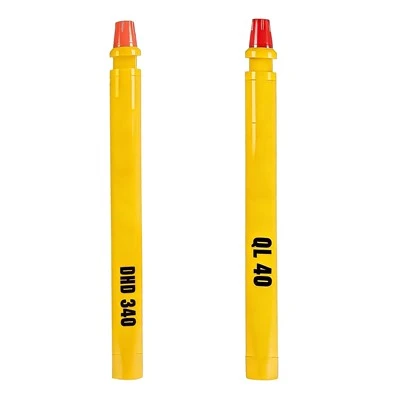
First off, let’s understand what a pneumatic rock drill is. It’s a tool that uses compressed air to break through rocks. It’s widely used in mining, construction, and other industries where you need to drill into hard surfaces. The air pressure is like the fuel that makes this drill work. Without the right amount of air pressure, the drill won’t perform as it should.
So, what exactly is the minimum air pressure? Well, it depends on a few factors. The type of rock drill is a big one. Different models have different requirements. For example, smaller, handheld pneumatic rock drills usually need a lower minimum air pressure compared to larger, more powerful ones.
Let’s start with the smaller drills. These are often used for light – duty tasks, like drilling small holes in softer rocks or for some DIY construction projects. Generally, a minimum air pressure of around 60 – 80 pounds per square inch (psi) can get these drills going. At this pressure, the drill can generate enough force to penetrate the rock, but it might not be as efficient as it could be.
When the air pressure is too low, the drill bit might not rotate fast enough or strike the rock with enough force. This can lead to slower drilling times, more wear and tear on the drill bit, and overall poor performance. You might find yourself having to apply more physical force to the drill, which can be tiring and also increase the risk of injury.
Now, for the larger, heavy – duty pneumatic rock drills. These are the ones used in big mining operations or large – scale construction projects. They need a much higher minimum air pressure. Usually, a minimum of 90 – 120 psi is required. These drills are designed to handle tough rocks, and they have more powerful mechanisms that rely on higher air pressure to function properly.
At 90 – 120 psi, the drill can rotate the bit at a high speed and deliver strong blows to the rock. This allows for faster and more efficient drilling. If the air pressure drops below this range, the drill might stall or not be able to break through the rock at all. In a mining setting, this can mean lost time and money, as the work comes to a halt.
Another factor that affects the minimum air pressure is the type of rock you’re drilling into. Softer rocks, like limestone or sandstone, require less force to break through. So, you can get away with a lower minimum air pressure. For example, if you’re drilling into sandstone, a smaller drill might work well at 60 psi.
On the other hand, harder rocks, such as granite or basalt, need more force. The drill has to work harder to penetrate these rocks, so a higher minimum air pressure is needed. For granite, even a large, heavy – duty drill might struggle if the air pressure is below 100 psi.
The length and diameter of the drill bit also play a role. Longer and larger – diameter drill bits need more air pressure to function effectively. A long drill bit has more friction with the rock, and a larger – diameter bit needs more force to break through. So, if you’re using a long, large – diameter bit, you’ll need to make sure the air pressure is on the higher side of the recommended range.
Now, let’s talk about how to ensure you’re getting the right air pressure. You need a good air compressor. A quality air compressor can provide a consistent and stable air pressure. It’s important to choose an air compressor that can meet the requirements of your rock drill.
Before starting to drill, you should check the air pressure using a pressure gauge. This will give you an accurate reading of the air pressure. If the pressure is too low, you might need to adjust the settings on the air compressor or check for any leaks in the air hoses.
Leaks in the air hoses can cause a significant drop in air pressure. You should regularly inspect the hoses for any signs of wear or damage. If you find a leak, you can either repair it or replace the hose.
In addition to the minimum air pressure, it’s also important to consider the maximum air pressure. Exceeding the maximum air pressure can damage the drill. Each drill has a specified maximum air pressure, and you should never go above it.
As a rock drill supplier, I’ve seen a lot of cases where improper air pressure has led to problems. Some customers didn’t realize the importance of the right air pressure and ended up with drills that didn’t work well or got damaged quickly.
That’s why I always emphasize to my customers the need to understand the air pressure requirements of their rock drills. If you’re in the market for a pneumatic rock drill, make sure you ask about the minimum and maximum air pressure requirements. And if you already have a drill, check your air compressor and hoses regularly to ensure you’re getting the right pressure.

If you’re thinking about purchasing a rock drill or have any questions about air pressure requirements, feel free to reach out. We’re here to help you make the right choice and get the most out of your rock drill. Whether you’re a small – scale contractor or a large mining company, we have the right drill for you. Just drop us a line, and we can start a conversation about your needs.
Shank Adapters References:
- Mining Equipment Handbook
- Construction Machinery Manual
Super Rock Machinery Equipment (Qingdao) Co., Ltd.
We are one of the most professional rock drill manufacturers and suppliers in China, featured by quality products and good price. Please feel free to buy advanced rock drill for sale here from our factory. Welcome to view our website for more information.
Address: No. 45, Pengwan Road, Qianwan Bonded Port Area, Qingdao Sub-district, Free Trade Pilot Zone, Shandong China
E-mail: sales@superrocktools.com
WebSite: https://www.superrocktools.com/
