If you’ve ever pulled up to a CNG station to refuel a light-duty truck, delivery van, or public transit bus, you might assume it’s just like stopping at a gasoline pump—except the fuel is compressed natural gas instead of liquid. But as someone who’s supplied CNG station equipment for 12 years, I can tell you that’s far from the truth. CNG stations don’t just run on regular tools or off-the-shelf hardware; they rely on specialized, safety-tested equipment that’s designed to handle the unique properties of natural gas: its low energy density at atmospheric pressure, its flammability in specific concentration ranges, and the extreme pressures required to compress it for transport and refueling. Today, I want to break down exactly what that specialized equipment is, why it’s non-negotiable, and how my team works with station owners to make sure every component meets industry standards. CNG Station

First, let’s start with the basics to set the stage. CNG is natural gas (mostly methane) that’s compressed to 200 to 250 bar (roughly 3,000 to 3,600 psi) for storage and dispensing. That pressure isn’t something you can manage with standard plumbing parts. The first critical piece of specialized equipment is the compressor unit itself. Unlike the small, low-pressure air compressors most of us use in a garage, CNG compressors are heavy-duty, positive-displacement models—usually reciprocating or screw-type—built to handle the high pressures needed to boost natural gas from a pipeline’s typical 5 to 20 bar up to refueling levels. What makes these units special isn’t just their pressure rating, either. They have to be certified for use with flammable gases, which means they use spark-proof components: non-sparking crankshafts, sealed electrical connections, and ventilation systems that prevent gas buildup in the engine compartment. I’ve seen too many stations try to cut costs with a standard air compressor, and the results are never good. One client in Ohio did that a decade ago, and the compressor overheated, causing a small gas leak that shut the station down for three months while we retrofitted it with a certified CNG unit. That’s the kind of mistake specialized equipment is designed to avoid.
Next, the storage cascade system. CNG stations don’t have a single large storage tank; they use a bank of smaller, high-pressure cylinders arranged in a “cascade” to store compressed gas efficiently. These tanks aren’t regular industrial tanks, either. They’re manufactured to withstand 3,000 to 5,000 psi, and each one is hydrostatically tested every five years to check for cracks or material weakness. The cascade system’s specialized job is to manage gas flow between the storage tanks and the dispensers evenly. When a vehicle pulls up, the dispenser needs to fill its tank quickly without causing pressure fluctuations that could damage the vehicle’s fuel tank or the station’s equipment. The cascade uses pressure regulators and control valves that communicate with dispensers to balance the flow: when a higher-pressure tank is empty, it pulls from a lower one first, ensuring a steady 200 to 250 bar at the nozzle. A lot of new station owners ask why they can’t just use a single large tank, but we always explain that single tanks are less efficient and pose a bigger safety risk. If a single tank fails, it can release all its pressure at once, whereas the cascade’s smaller tanks limit the scope of a leak.
Then there’s the dispenser unit, which is the part that interacts directly with the driver. CNG dispensers are nothing like gasoline pumps. They have a high-pressure hose (usually 10 to 20 feet long, reinforced with multiple layers of steel and thermoplastic) that’s rated for 3,600 psi, and a nozzle that’s designed to fit only CNG vehicle fuel valves—so you can’t accidentally connect it to a gasoline tank. More importantly, the dispenser has a built-in pressure control system that stops refueling automatically when the vehicle’s tank is full. If a standard water pump was used here, it would either overfill the vehicle’s tank (leading to pressure buildup and a leak) or run out of pressure before the tank is full. We also equip our dispensers with gas leak detectors that trigger an alarm and shut off the flow if they sense even 10% of the lower flammable limit (LFL) of methane. That’s a feature you won’t find in any standard liquid fuel pump. Last year, a client in Texas had a minor leak at a dispenser nozzle, and the alarm shut off the gas before it could ignite. The driver didn’t even notice, but our equipment prevented a potentially dangerous incident.
Safety systems, in general, are where CNG stations differ most from other fueling locations. Natural gas is lighter than air, so it can spread quickly through a station’s pit, around pipes, or under equipment sheds. That means every electrical component at the station—from lights to control panels—has to be rated for Class I, Division 1 or 2 hazardous locations, which means it’s sealed to prevent gas from entering and igniting. We also install special pressure relief valves on all high-pressure components: if a tank or line overpressurizes, the relief valve opens to release gas in a controlled, safe direction (usually upward, away from people and equipment) instead of rupturing. A common mistake we see is stations using standard relief valves, which are designed for water or low-pressure air. Those won’t vent gas properly during an overpressure event, leading to equipment failure. We also work with clients to install remote monitoring systems that track pressure, temperature, and gas levels in real time. Our team checks these systems 24/7, so if there’s a small anomaly—like a pressure drop in a storage tank—we can alert the station operator before it becomes a problem.
Now, let’s talk about regulatory reasons this specialized equipment is non-negotiable. In the U.S., CNG stations have to comply with standards set by the National Fire Protection Association (NFPA 52), which specifically outlines the equipment requirements for compressed natural gas systems. The NFPA doesn’t allow standard industrial equipment for CNG applications; every compressor, tank, valve, and dispenser has to be listed by a certified testing organization (like Underwriters Laboratories, or UL) as suitable for CNG service. Many countries around the world have similar standards: Canada uses CAN/ULC-S128, the EU uses EN 12798, and Australia uses AS 2885.10. Cutting corners on equipment not only violates these regulations—it puts the station, its employees, and nearby properties at risk. Last year, we had a client in Florida that tried to use a non-certified compressor to save $15,000. The local fire marshal shut the station down within a week, and they ended up paying twice as much to replace the compressor and retrofit the entire system. That’s a lesson I always emphasize: specialized CNG equipment isn’t an extra cost; it’s an investment in compliance, safety, and long-term operation.
I know some station owners might think, “Can’t I just adapt regular equipment to work for CNG?” The short answer is: no, and here’s why. Methane has different physical properties than gasoline or air. For one, it’s more corrosive to certain types of metals, especially carbon steel, over time. So standard steel pipes used for water or gasoline will degrade faster with CNG, leading to leaks. We use seamless carbon steel pipes lined with a corrosion-resistant coating, or stainless steel, for all high-pressure lines. Another issue is thermal expansion: when natural gas is compressed, it heats up, and when it’s released, it cools down. Standard valves and pipes aren’t designed to handle the rapid temperature changes (from -40°F to 200°F) that CNG systems experience during refueling. I once worked with a station in California that used standard valves, and after six months, the constant heating and cooling caused seals to crack, leading to a slow leak that went undetected for weeks. We replaced the seals with CNG-specific materials (like Buna-N or Viton, which are rated for methane and temperature fluctuations) and haven’t had a problem since.
What about small, low-volume CNG stations, like those for a fleet of 10 delivery vans? Do they still need specialized equipment? Absolutely. Even a small station operating at 200 bar uses high-pressure components that have to meet the same safety standards as a large public station. We’ve supplied equipment for stations as small as a single dispenser for a local utility company, and even those require certified compressors, storage tanks, and leak detection systems. The only difference is the size of the components, not the specialized nature. A small compressor for a fleet station still has to be spark-proof, leak-tested, and listed for CNG use. Trying to skip that would be like trying to use a bicycle pump to inflate a semi-truck tire: it’s not designed for the pressure, and it’s dangerous.
As a supplier, that’s why we don’t offer generic parts for CNG stations. Every piece of equipment we provide is engineered, tested, and certified specifically for natural gas service. We work with station owners from the initial design phase, helping them choose the right compressor size, storage cascade capacity, and dispenser features to match their needs. We also provide installation, training, and ongoing maintenance support to make sure the equipment works safely for years. Too many suppliers out there will cut corners to get a lower price, but we’ve built our reputation on reliability, and that starts with using the right equipment for the job.
If you’re planning to build or upgrade a CNG station, don’t make the mistake of assuming regular equipment will work. CNG is a safe, cost-effective fuel, but only if the infrastructure that delivers it is designed and equipped to handle its unique properties. The specialized equipment isn’t just a luxury—it’s a requirement for compliance, safety, and long-term operation.
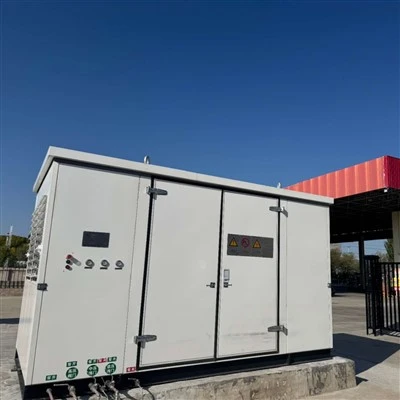
If you’re ready to discuss your CNG station equipment needs, or you have questions about what’s required for your specific application, we’re here to help. Don’t hesitate to reach out to our team to get the details you need to build a safe, efficient CNG fueling site.
CNG Standard Station References
NFPA 52: Compressed Natural Gas (CNG) Vehicular Fuel Systems, National Fire Protection Association, 2021 edition.
CAN/ULC-S128: Compressed Natural Gas (CNG) Fueling Systems for Automotive Vehicles, Canadian Standards Association, 2019.
EN 12798: Natural Gas Infrastructure – CNG Fueling Stations for Automotive Use, European Committee for Standardization, 2020.
AS 2885.10: Pipelines – Gas Transmission and Distribution, Part 10: Natural Gas Fueling Stations, Standards Australia, 2018.
Qingdao Lenado Intelligent Equipment Co., Ltd.
Qingdao Lenado Intelligent Equipment Co., Ltd. is one of the most experienced CNG station manufacturers and suppliers in China. We have world-leading production equipment and strong manufacturing capabilities. Please rest assured to wholesale bulk customized CNG station from our factory.
Address:
E-mail: genkegasstation@163.com
WebSite: https://www.cnggasstation.com/
