Hey there! I’m a supplier of specialized equipment, and today I wanna chat about the power requirements for this kind of gear. It’s super important to get these requirements right, ’cause if you don’t, you could end up with equipment that doesn’t work properly or even gets damaged. Specialized Equipment
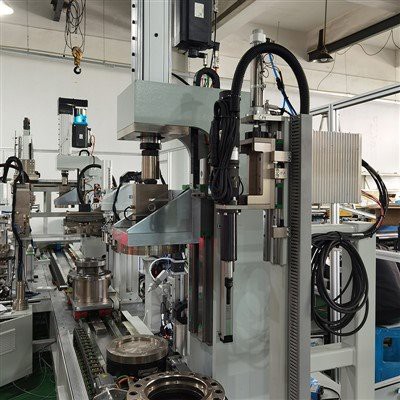
First off, let’s talk about why power requirements matter. Specialized equipment is designed to do specific jobs, and it needs the right amount of power to function efficiently. If you supply too little power, the equipment might not work at all, or it could operate at a reduced capacity. On the other hand, if you supply too much power, it can cause overheating, component failure, and even pose a safety risk.
So, what factors determine the power requirements of specialized equipment? Well, there are a few key things to consider.
1. The Type of Equipment
Different types of specialized equipment have different power needs. For example, a high – end 3D printer used in manufacturing might require a lot more power than a small, portable barcode scanner. The 3D printer has motors, heaters, and other components that need a significant amount of energy to operate. In contrast, the barcode scanner mainly needs power for its light source and the sensor to read barcodes, so its power requirements are much lower.
2. The Functionality
The more complex the functionality of the equipment, the higher the power requirements. Take a medical imaging machine like an MRI scanner. It has to generate strong magnetic fields, process large amounts of data, and control various mechanical components. All these functions demand a substantial amount of power. In comparison, a simple laboratory centrifuge, which just spins samples at a set speed, has relatively lower power needs.
3. The Size and Capacity
Generally, larger equipment with a higher capacity needs more power. A big industrial oven used for heat – treating metal parts will consume more electricity than a small benchtop oven used for baking samples in a research lab. The larger oven has a bigger heating element and more insulation to maintain the high temperature, which requires more energy.
4. Efficiency
The efficiency of the equipment also plays a role. Newer models of specialized equipment are often designed to be more energy – efficient. They use advanced technologies and components that can perform the same tasks with less power. For instance, a modern CNC (Computer Numerical Control) machine might use less power than an older model with the same cutting capabilities, thanks to better motor control and power management systems.
Now, let’s look at how to determine the power requirements of a specific piece of specialized equipment.
Checking the Manufacturer’s Specifications
The first step is to check the manufacturer’s documentation. They usually provide detailed information about the power requirements, including the voltage, current, and power consumption. This information is crucial as it gives you a baseline for what the equipment needs to operate correctly. For example, if a piece of equipment says it requires 220V and 5A, you can calculate the power using the formula P = VI (Power = Voltage x Current). In this case, the power would be 220V x 5A = 1100W.
Measuring the Power Consumption
Sometimes, the actual power consumption might be different from what the manufacturer states, especially if the equipment is being used in a non – standard environment or with additional accessories. You can use a power meter to measure the real – time power consumption. This is a handy tool that can give you accurate data on how much power the equipment is using.
Considering the Power Source
Once you know the power requirements, you need to make sure you have a suitable power source. There are different types of power sources available, such as mains power, generators, and batteries.
Mains Power
Mains power is the most common power source for specialized equipment in a fixed location. It’s reliable and usually provides a stable voltage. However, you need to ensure that the electrical infrastructure in your facility can handle the power load. For example, if you’re installing a large piece of equipment that requires a high – power supply, you might need to upgrade your electrical panel.
Generators
Generators are a good option for equipment that needs to be used in remote locations or during power outages. But you need to choose a generator with the right capacity. If the generator is too small, it won’t be able to supply enough power, and if it’s too large, it can be wasteful and expensive.
Batteries
Batteries are useful for portable specialized equipment. They offer flexibility and mobility. However, you need to consider the battery capacity and the charging time. Some equipment might require high – capacity batteries to operate for an extended period, and you need to make sure you have a way to recharge them.
As a specialized equipment supplier, I’ve seen firsthand the importance of getting the power requirements right. I’ve had customers who’ve had problems because they didn’t properly consider the power needs of their equipment. Some ended up with equipment that didn’t work as expected, and others had to spend extra money on upgrading their power infrastructure.
That’s why I always recommend that my customers take the time to understand the power requirements of the equipment they’re buying. It might seem like a hassle, but it can save a lot of headaches in the long run.
If you’re in the market for specialized equipment and have questions about power requirements, don’t hesitate to reach out. I’m here to help you make the right choices and ensure that your equipment runs smoothly. Whether you’re a small business owner or part of a large corporation, I can provide you with the information and support you need.
Automotive Industry Production Equipment Let’s have a chat about your specific needs and see how we can get you the best – fitting specialized equipment. I’m confident that together, we can find a solution that meets your requirements and keeps your operations running efficiently.
References
- "Electrical Engineering for Non – Electrical Engineers" by Earl Boysen
- Manufacturer’s manuals of various specialized equipment
- Industry standards and guidelines for power consumption in specialized equipment
Shanghai Zenyan Automation Engineering Co., Ltd.
As one of the leading specialized equipment manufacturers in China, we warmly welcome you to buy advanced specialized equipment made in China here from our factory. All customized machines are with high quality and low price. Contact us for quotation.
Address: 3rd Floor, Building A, No.5629 Beisong Road, Chedun Town, Songjiang District, Shanghai, China
E-mail: zenyan_sh@163.com
WebSite: https://www.zenyanauto.com/
