If you’ve ever held a smartphone that doesn’t overheat mid-battery drain, a portable medical monitor that runs 12 hours off a single AA battery, or a car infotainment system that stays stable even when your engine’s alternator spikes, you’ve relied on a low-dropout linear regulator (LDO). For years, LDOs were seen as the “workhorse” of power management: simple, cheap, and reliable, but often overlooked as switching regulators took the spotlight for high-efficiency designs. That perception is shifting fast, though. As a LDO supplier that’s worked with everything from aerospace test gear to wearable fitness trackers over the last 15 years, I’ve seen three core trends redefine what LDOs can do—trends that aren’t just incremental tweaks, but fundamental shifts in how engineers design for modern electronics. LDO

The first, and most impactful, trend is ultra-low quiescent current (IQ) LDOs, tailored for battery-powered devices that sit idle most of the time. A decade ago, even a “low IQ” LDO would draw 10 to 20 microamps when the load was off. For a device that runs on a coin cell, that meant a battery life of 2 to 3 years at best. Today’s top-tier ultra-low IQ LDOs hit sub-1 microamp IQ—some as low as 200 nanoamps. That sounds like a tiny change, but it’s game-changing for devices like remote temperature sensors, smart locks, and glucose monitors that only activate once every few minutes, hours, or even days. Last year, we worked with a client building a industrial IoT (IIoT) sensor that’s mounted on gas pipeline valves, where replacing batteries is impossible without a crew of technicians. The original design used a switching regulator, which drew 8 milliamps of idle current and needed a new battery every 18 months. Swapping to our new ultra-low IQ LDO cut idle draw to 800 nanoamps, extending battery life to 12 years—well beyond the pipeline’s 10-year maintenance cycle.
What makes this trend more than just a number? Today’s ultra-low IQ LDOs don’t force engineers to trade off stability or transient performance for low power. Older low-IQ designs would dip or spike output voltage when a sensor activated, because the regulator couldn’t respond fast enough to sudden load changes. Modern parts use advanced error amplifiers and adaptive biasing to keep transient response tight—often less than 100 millivolts of deviation—even when switching from a 1 microamp idle load to a 100 milliamp active load. That balance is critical: for wearables, a 100 millivolt dip can mess with the accuracy of biometric sensors like heart rate monitors, so engineers can’t afford to sacrifice performance for battery life.
The second big trend is integration with advanced thermal and load management features, turning LDOs from simple linear regulators into smart power nodes. Just a few years ago, most LDOs were standalone components—you picked a part that matched your input voltage, output voltage, and current rating, soldered it to the board, and called it a day. Now, leading LDOs include built-in protection circuits, thermal throttling, and even load switching that can be controlled via I2C or SPI. For example, our latest automotive-grade LDO has a programmable thermal limit: it can trigger a warning signal if the junction temperature crosses 125°C, or automatically reduce output current to keep the part within safe operating limits. That eliminates the need for external thermal sensors and diodes, cutting component count and board space by up to 30% for small form-factor designs like ADAS cameras, which are packed tightly in car windshields.
What’s driving this integration? The rise of advanced packaging like wafer-level chip-scale packages (WLCSP) is a big part of it. WLCSPs are tiny—often smaller than a grain of rice—so there’s very little space on the package for external discrete components. That means LDO manufacturers have to build more functionality into the die itself. Also, modern electronics are more sensitive than ever: a single overvoltage event can destroy a sensor, and a thermal runaway can kill a whole board. Built-in features like reverse current protection, short-circuit protection, and overvoltage lockout have moved from “nice-to-have” to “required” in most industries, especially automotive and medical. For a portable defibrillator, for example, a faulty regulator could put the patient at risk, so our LDOs for that market include redundant protection circuits that trigger even if the primary control circuit fails.
The third trend is the expansion of LDOs into high-voltage and wide-input applications, a space that was once the exclusive domain of switching regulators. For years, LDOs were limited to input voltages under 24 volts, because linear regulators work by dissipating excess voltage as heat, and high input voltages would generate too much heat, requiring large heat sinks and wasting power. Today, LDOs for industrial and automotive applications can handle input voltages up to 80 volts, with efficiency of over 90%—a number that’s almost on par with low-current switching regulators. That’s a huge shift for applications like electric vehicle (EV) charging ports, where the input voltage from the grid can jump to 48 volts or more, and industrial motor control systems that run on 48 to 60 volts.
Last year, an EV startup came to us with a problem: their on-board charger needed a regulated 12-volt supply for the infotainment and driver assistance systems, but their original design used a switching regulator that generated a lot of radio frequency interference (RFI). RFI is a big deal in EVs, because it can interfere with critical sensors like collision avoidance radar. Swapping to a switching regulator would have required extensive filtering, adding cost and weight. Our new 60-volt input LDO cuts RFI by over 70% compared to switching regulators, because it doesn’t have the fast switching edges that generate electromagnetic interference, and it runs cool enough that no heat sink is needed—saving the startup 15% on their BOM cost.
This expansion into high-voltage is also tied to material science: modern LDOs use advanced semiconductor materials like silicon-on-insulator (SOI) wafers, which can handle higher voltages and higher temperatures than traditional bulk silicon. SOI wafers reduce leakage current at high voltages, so the LDO doesn’t waste power as heat, and they’re more resistant to radiation damage, making them ideal for aerospace applications where components are exposed to cosmic rays. We recently shipped a batch of 48-volt input LDOs to a satellite manufacturer, where radiation tolerance is non-negotiable—our parts have a total ionizing dose (TID) rating of 300 krad, enough to withstand 10 years in low Earth orbit.
Of course, no trend comes without challenges, and the biggest one right now is balancing efficiency for high current applications. LDOs will always be less efficient than switching regulators when the input-output voltage differential is large—if you have a 12-volt input and a 1.8-volt output, a linear regulator will dissipate 85% of the input power as heat, which is unsustainable for anything over 1 amp. But for low to medium current loads (under 500 mA), where efficiency isn’t the top priority and low noise or small board space is, LDOs are still the best choice. The latest innovations are closing that gap: some LDOs now have a mode that automatically switches between linear and low-current switching when the load is low, giving engineers the best of both worlds.
As a LDO supplier, we’re seeing engineers shift their mindset from “I’ll use a switching regulator unless I have to use an LDO” to “let’s see where an LDO can solve this problem.” That’s a shift that’s been driven by the trends I’ve outlined: ultra-low current for battery life, integration for space and reliability, and high-voltage capability for harsh environments. Whether you’re designing a smart watch that needs a tiny, power-efficient regulator for its heart rate sensor, or a factory robot that needs a rugged LDO to handle 48-volt motor noise, there’s an LDO that fits better now than ever before.
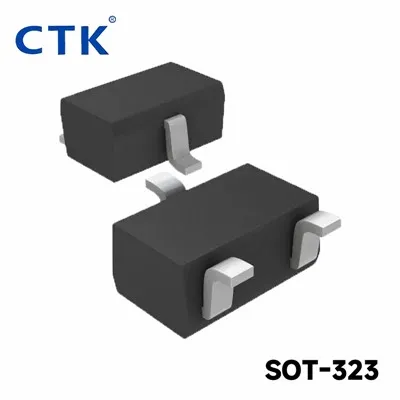
If you’re working on a design and want to discuss how the latest LDO technologies can help meet your performance, size, or reliability goals, our team of power management experts is ready to collaborate. We’ve supported engineers across industries, from medical devices to aerospace, and we can help you evaluate the right parts, optimize your layout, or even customize a design to fit your specific needs. Reach out to us to start a conversation on how LDOs can elevate your next product.
TVS References
- Texas Instruments, “Low-Dropout Linear Regulators: Key Trends and Design Considerations,” 2023.
- Analog Devices, “Ultra-Low Quiescent Current LDOs for Battery-Powered IIoT Devices,” 2022.
- International Organization for Standardization (ISO), “Automotive Electronic Components: LDO Reliability Requirements,” 2021.
- IEEE Transactions on Power Electronics, “Advanced LDO Designs for High-Voltage Industrial Applications,” vol. 37, no. 4, 2022.
- JEDEC, “Thermal Performance Standards for Semiconductor Power Devices,” JESD51-1, 2020.
Tongke Electronic Co., Ltd
Tongke Electronic Co., Ltd. is one of the most experienced ldo manufacturers and suppliers in China, featured by quality products and low price. Please rest assured to wholesale advanced ldo made in China here from our factory. Contact us for pricelist.
Address: No.3,Chayuan Rd, Street 3, AilingKan, Dalingshan, Dongguan, Guangdong, China.
E-mail: jack@ctk-elec.com
WebSite: https://www.ctkchip.com/
