Hey there, if you’re reading this, chances are you’re staring down a wall of carbon dioxide remover options and wondering, “Wait, what even do I need here?” I’ve been in your shoes—for years, actually, since I started this gig as a carbon dioxide remover supplier. I’ve talked to everyone from small farm owners frustrated by crop growth limits to big industrial ops dealing with pesky emission fines, even research labs needing tight CO2 control for their experiments. And let’s be real, most of the guides out there sound like they were written by a robot who never breathed air—super formal, full of jargon, and zero actual help for someone trying to make a real call. Carbon Dioxide Remover
So let’s cut the crap. This isn’t gonna be a list of fancy terms no one uses. This is the stuff I actually tell my customers when they call panicking, like, “My warehouse CO2 is spiking and I need this fixed TODAY” or “My greenhouse tomatoes won’t set fruit—what’s wrong here?” Let’s break down how to pick the right remover without wasting your cash, time, or sanity.
First off, let’s start with the biggest question no one asks first: “Where are you putting this?” Because a remover that works for a 10×10 grow tent is useless for a 10,000 sq ft factory floor. I see this all the time—someone buys a unit they saw online for a small space, tosses it in a big room, and wonders why it doesn’t do squat. Let’s get specific here, not vague.
If you’re in agriculture—say, a commercial greenhouse, indoor farm, or even a small backyard operation ramping up—your needs are way different than an industrial plant or a lab. For greenhouses, you’re not just removing excess CO2 (wait, actually—surprise! Most people think CO2 is bad everywhere, but plants actually need it for photosynthesis. Too much, though, and they get stunted, or pests love it. So for indoor farms, you need a remover that can keep levels steady, not just blast all CO2 out. A lot of our ag customers go for the modular desiccant-based units here—they’re not too pricy, easy to adjust, and you can add more modules as your farm grows. Last month I talked to a guy with a 5-acre hydro farm who started with two small units, then added four more a year later when he expanded. No big hassle, no need to tear out ductwork or anything.
But wait—ag isn’t the only one. If you’re in a lab, especially a biotech or environmental lab that does air quality testing, you need precision. Like, down to parts per million precision. Those cheap consumer units? They swing by 100+ ppm, which is enough to ruin a sample. For labs, our molecular sieve units are the way to go—they’re designed to lock in exact CO2 levels, no fluctuation, so your test results don’t get skewed. I once had a researcher call me in a panic because their air quality study was failing, and turns out their old unit was adding extra CO2 instead of removing it—oops. Switched to our sieve unit, and their data was spot on within a week.
Then there’s industrial stuff—manufacturing, warehouses, even data centers (wait, data centers! Servers pump out so much CO2 and heat, it’s a real issue for their gear). For big, open spaces like that, you need something with heavy-duty airflow capacity. Desiccant units work here too, but usually the larger, industrial-grade ones, or even some of our amine-based systems for super high volumes. A food processing plant I work with had a problem where their packaging area had CO2 build-up from fermenting dough, and it was making workers dizzy. We paired them with two large amine units that cycle air 10 times an hour in that space, and now their CO2 levels are consistent, no more sick days from that.
Okay, so location is step one—got that. Next up: what’s your CO2 source? Because removing CO2 from a space where it’s coming from a steady, controllable source is way different than cleaning it up from random, variable emissions. Let’s say you have a home grow tent—your CO2 comes from the grow lights, or from you breathing near it. Steady, low volume. So a small, plug-in desiccant unit works fine. But if you’re a factory welding all day, or have a composting area on site, that CO2 output is spiky, high volume. You need a unit that can adjust its output on the fly, not just run at one speed. A lot of our units have variable speed fans now, which is a game-changer for that—they sense CO2 levels via a built-in sensor, and crank up or down as needed, so you’re not wasting energy when you don’t need to.
Wait, speaking of energy—this is huge, and everyone overlooks it at first. I had a customer last year who bought a super cheap unit online, and his electric bill went up 40% because it ran 24/7 even when CO2 was fine. That’s a waste of cash, plain and simple. So look for units with smart sensors and auto-adjusting features, not just on/off switches. Also, think about the power source. If you’re off-grid—like a remote greenhouse or a mountain lab—you can’t have a unit that runs on 110V grid power. We make solar-compatible units that work with small solar setups, perfect for those remote spots. I had a customer in Alaska who runs a small berry farm, and he said his solar-powered CO2 remover cut his heating costs too, because it’s designed to run efficiently even in cold temps.
Now, let’s talk about the stuff that’s not just numbers—maintenance and ease of use. No one has time to take apart their CO2 remover every week to scrub parts, right? So if you’re a small farm owner who’s already busy planting, harvesting, fixing leaky irrigation, you don’t want a unit that needs daily filter changes or chemical top-ups. Our desiccant units use rechargeable desiccant material—you just pop it in, and it recharges automatically with the air flow, no messy chemicals, no replacing it every month. For industrial clients, though, maintenance is a bit different—they can handle scheduled professional checks, but even then, we design our industrial units with easy-access panels so their techs don’t have to climb through ductwork to fix a sensor. I once had a customer who switched to our units because his old supplier’s unit required a tech to come every two weeks, which cost him $500 a visit—now he does all the basic checks himself in 10 minutes a week, saving him thousands a year.
Wait, also—are there any extra features you might not think about? Like, odor control? If you’re in a composting facility or a waste processing site, CO2 is the main issue, but the smell is a close second. Some of our units have activated carbon filters built in that take care of odors at the same time, so you don’t need a separate system. That’s a big one for a lot of our municipal clients. And if you need to vent the CO2 somewhere—like, not just trap it in the unit—we have units that can vent captured CO2 outside (or even repurpose it, like for aquariums or greenhouse fertilization—side hustle, right? A customer of ours sells excess CO2 from his unit to local greenhouses, so he basically makes money from his emission control setup. Cool, huh?)
Now, let’s talk about what NOT to do. Don’t buy the biggest unit you can find just because someone says “more power.” I’ve seen that too many times. A 5,000 CFM unit in a 1,000 sq ft room will cycle air so fast, it’ll dry out your plants, or make the air too cold, or just waste energy. Do the math—most units list their coverage area right on the specs, but don’t just go by square footage. Think about height too. A 10 ft ceiling is different than a 20 ft ceiling. So if your space has high ceilings, go up a unit size, not just by floor space. Also, don’t ignore compliance. If you’re in an area with emissions regulations—like California, or the EU—your unit needs to meet certain standards. All of our units are certified to meet current EPA and EU rules, so you don’t have to worry about getting fined. That’s a big weight off, I know.
Another thing: warranty and support. This is non-negotiable, in my book. If a unit breaks after 6 months, and the supplier won’t return your calls, what’s the point? We offer a 2-year warranty on all our standard units, and a 5-year warranty on our industrial grade ones, plus 24/7 support for all customers. I answer most of the after-hours calls myself, actually—last week a guy in Texas had a sensor go out at his pork processing plant at 2 a.m., and I walked him through resetting it over the phone, no need for a service call. That’s the kind of thing you can’t put a price on.
Wait, let’s recap for people who are still trying to wrap their head around this—let’s make a quick cheat sheet, okay? 1. Know your space size (square footage + ceiling height) and location (ag, lab, industrial, etc.). 2. Figure out your CO2 source: is it steady, low-volume, or spiky, high-volume? 3. Check power needs: grid, solar, off-grid? 4. Think about maintenance: do you want something low-effort, or can you handle regular checks? 5. Don’t forget extra needs: odors, venting, compliance? 6. Pick a supplier that actually supports you, not just sells you a unit.
Look, I get it—buying equipment like this feels overwhelming, especially if it’s not your core business. You’re a farmer, not an engineer. You’re a warehouse manager, not an air quality specialist. That’s why we’re here. We don’t just sell carbon dioxide removers—we walk you through every step, from measuring your space to picking the right unit to making sure it’s installed and working like it should. No jargon, no pushy sales guys, no hidden fees.
If you’re still not sure, don’t guess. Reach out, tell me a bit about your space, what you’re using it for, any problems you’ve been having, and I’ll help you figure out exactly what you need. No pressure, no hard sell—just straight talk about what will actually work for you, not what makes us the most money. Because at the end of the day, that’s what matters, right? Getting this fixed, without the headache.
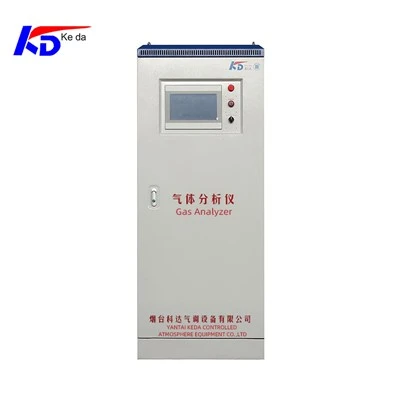
Gas Analyzers References:
- Global Carbon Capture and Storage Institute. (2022). Industrial CO2 Removal Technologies: A Practical Guide.
- American Society of Heating, Refrigerating and Air-Conditioning Engineers (ASHRAE). (2021). Ventilation for Acceptable Indoor Air Quality.
- Food and Agriculture Organization (FAO). (2020). Indoor Agriculture: Air Quality Management for Crop Optimization.
- U.S. Environmental Protection Agency (EPA). (2023). Industrial Air Emissions Control Technologies.
Yantai Keda Zhixian International Trade Co., Ltd.
As one of the leading manufacturers and suppliers of carbon dioxide remover in China, we have world-leading production equipment and strong manufacturing capabilities. Please feel free to buy high-grade carbon dioxide remover for sale here from our factory.
Address: No.18-2, Wuhan St, Yantai ETDZ, Yantai, Shandong, China
E-mail: ytkeda2026@163.com
WebSite: https://www.kedacastorage.com/
